Headless Leads: Why Dealership Foot Traffic Doesn’t Convert
Published on by Manpreet Dhillon
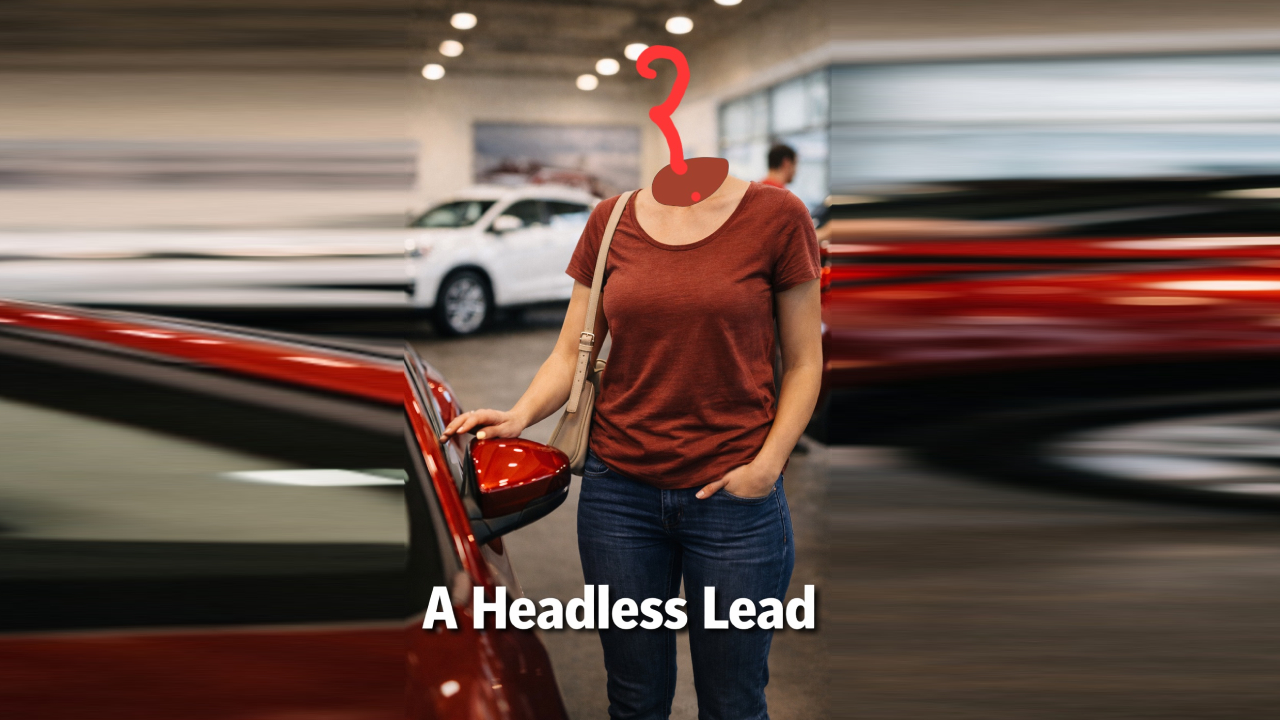
Foot traffic is not the problem. Headless leads are. When a dealership collects only a name and phone number, the CRM gets a record, but the sales team loses the buyer's intent.
This article is written for used car dealerships and auto dealers who want more than just "more leads". It is about capturing buying intent, qualifying walk-ins, and deciding who should get follow-ups, price alerts, and offers.
The experiment that triggered this thought
I think a lot. And sometimes those thoughts start forming during very normal experiences.
Last week, I visited three different dealerships, just for my own experiment. Not because I urgently needed to buy, but because I wanted to observe how dealerships treat foot traffic when a visitor walks in with curiosity, preparation, and intent still forming.
Before visiting, I had already done my research. I knew which vehicles they had in stock. I knew trims, features, and alternatives. So when I walked in, I did not ask general questions. I enquired only about the cars they actually had available.
At all three dealerships, the process began the same way. My name was asked. My phone number was noted. In one case, the salesperson went a step ahead and asked, "When are you planning to buy your Highlander?"
I spent time discussing features, options, and small details. Then I walked out.
The question that stayed with me
After each visit, the same thought stayed with me.
They had my name. They had my phone number. But how would they ever know how eager I actually was to buy a car?
If I was entered into their dealership CRM as a lead, how would they predict whether I was a hot buyer, someone close to a decision, or just a casual visitor? From the system's point of view, I looked identical to hundreds of others.
Definition: Headless lead
A headless lead is a lead where identity exists, but thinking is missing. The dealership captures who you are, but not why you came, how soon you will buy, what you are comparing, and what is blocking the decision.
Why name and phone number are not intent
My name did not explain why I walked in that day. My phone number did not reveal urgency. Even the question about when I would buy was asked without understanding what I was trying to decide. Context was missing. Intent was invisible.
This is where most dealerships misunderstand foot traffic. They believe walk-ins are unpredictable. They believe serious buyers will announce themselves. They believe collecting contact details is enough to manage follow-ups and offers.
But foot traffic is not random. It is just poorly observed.
The data points that actually reveal buying intent
Every walk-in carries signals. Some visitors are casually browsing. Others are comparing options. Some are narrowing down a decision they have already made internally. The difference is not obvious unless the dealership captures behavior, conversation depth, and context.
This is what I mean by "you need data points". Not more forms. Not more fields for the sake of it. The right data points are simply a way to record intent signals that already show up during a normal conversation.
For example, why did the visitor come in today? Did they come because they saw a specific vehicle online, or because they are generally exploring? A visitor who asks for one exact stock unit behaves very differently from someone who says, "What do you have available?"
Another signal is specificity. When someone starts comparing trims, asking about delivery timelines, asking about monthly payments, or asking what the out-the-door price looks like, that person is not "just browsing". They are moving closer to decision-making.
Another powerful signal is comparison behavior. When a visitor mentions another dealership, another model, another trim, or a competing listing, that is not a threat. That is evidence the buyer is already in a decision stage. They are not starting a journey. They are narrowing it.
Even the way a visitor behaves inside the showroom tells a story. Do they spend most of the time on one vehicle? Do they ask to sit inside it? Do they check cargo space, rear seating, visibility, or phone connectivity? Do they ask about warranty, maintenance, reliability, or resale value? Behavior is often more honest than answers.
And finally, the exit matters. If they leave without buying, what is the reason? Is the vehicle not available? Is the trade-in pending? Is financing the blocker? Are they going to "think", or are they actually going to compare two specific options and return? That last part is not a rejection. It is a timeline clue.
How these signals help you decide who gets offers
Once you capture intent signals, everything changes. You stop treating every lead the same way. You stop sending the same offers to everyone. You stop guessing.
Now the dealership can decide who deserves a follow-up today and who needs time. Now you can decide who should receive education instead of a discount. Now you can decide who should get a price alert because they are actively comparing listings. And now you can decide who is just browsing and should not be pushed yet.
Without this, offers become random. Discounts go to people who are not ready. Hot buyers get generic follow-ups. And sales teams complain that "leads do not convert".
Why dealerships think foot traffic does not work
When sales teams say, "walk-ins do not convert", what they usually mean is, "we do not know who is serious".
The problem is not the showroom. The problem is that leads are collected without a head. The CRM gets filled, but the sales team loses context, urgency, and intent.
The difference between chasing leads and guiding buyers
This is one of the biggest differences between struggling dealerships and successful dealerships. Successful dealers do not just collect people. They capture intent.
People do not walk into dealerships ready to sign paperwork. They walk in ready to think out loud. They walk in to validate research, test assumptions, and move one step closer to a decision.
If a dealership captures that thinking, it guides the buyer. If it does not, the buyer leaves and buys elsewhere.
Final takeaway
Foot traffic becomes valuable only when intent is captured. Otherwise, it is just people passing through. Put the head back on the lead, and you will know when, how, and to whom to send offers.
Keywords: used car dealership, car dealership CRM, foot traffic, lead qualification, buying intent, walk-in leads, follow-up strategy, price alerts, dealership offers, auto dealer sales process.