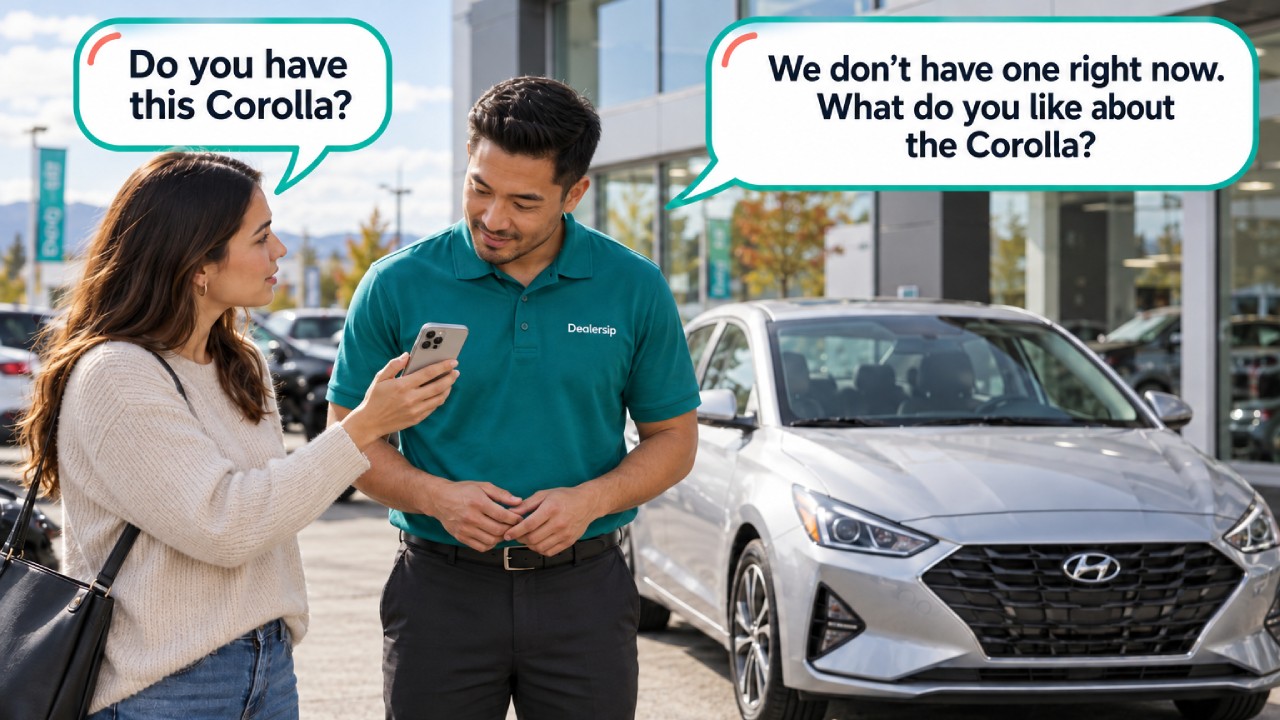
When a buyer asks whether a particular Civic is available, answer that question before asking why they chose the model. An independent dealer may have no suitable example of the requested model, while another vehicle on the lot could meet the buyer’s needs.
Whether you handle the inquiry in the BDC or meet the buyer in the showroom, introduce that alternative through a comparison that matters to them. They may have already done considerable research or had a good experience with their previous car. Give them a reason to look at something else without making them defend that work or experience.
1. Answer first, then ask why they chose that model
The dialogue and CRM note in this guide are sample wording to adapt. If the Civic has sold, start with: “That Civic has sold. Would you like me to check for another Civic, or would you consider a different model?”
If you have not confirmed availability, say you need to check and get the answer before steering the conversation elsewhere. Asking “Why a Civic?” while leaving the availability question unanswered can sound like you are avoiding it.
Once you have answered, ask what drew them to the car. Give the follow-up question the most attention: the model name alone does not tell you what another vehicle would need to offer.
- Previous ownership: “What did you like about your last one?” Find out whether they want familiar controls or a similar driving experience.
- Reputation: “When you say reliable, what are you most concerned about?” Ask what evidence they would need before considering another model.
- Budget: “Are you mainly looking at the purchase price, or the cost of owning it?” An affordable car does not necessarily mean the car with the lowest payment.
- A required feature: “What does your next car have to have?” Separate essentials from preferences before choosing an alternative.
You do not need to ask every question. Follow their answer, and if they simply like how the car looks, accept that as a reason.
2. Acknowledge their reason without criticizing the car
Keep this confirmation brief. If their previous Corolla treated them well, you might say: “You had a good experience with yours, so it makes sense to start there.”
That recognizes their experience without making a claim about every Corolla. Calling their choice boring, overpriced or inferior only gives them something to argue with. Skip “Good choice, but…” and move to the comparison on its own merits.
3. Ask to compare one alternative, including its drawback
Choose a vehicle that offers something relevant to the buyer’s priority, not simply one you want to move. Check the actual stock number and trim so your invitation reflects the car you can show them.
For a price-focused buyer, use wording like this only when the listings and odometers support it: “Would you like to compare this Elantra with the Corolla on purchase price? The Elantra has a lower asking price, but it has more kilometres on it. We can look at their condition before you decide whether to drive it.”
You have named the possible advantage and the trade-off before asking the buyer to spend time on the car. The comparison concerns those particular vehicles, not whether an Elantra is universally better than a Corolla.
If comfort matters most, offer to compare seating positions rather than announcing which car is more comfortable. Mention a relevant compromise, such as a preferred feature the alternative lacks, but do not invent a drawback to make the pitch sound balanced.
If they decline, accept the answer and continue with their original request. If you cannot identify an advantage they care about, you have not yet found a useful alternative.
4. Demonstrate the difference they agreed to compare
Keep the demonstration focused on the buyer’s question. Someone comparing seat comfort does not need a tour of every feature before adjusting the seat.
CAA South Central Ontario advises testing shortlisted cars within the same day and driving in conditions that reflect everyday use. Where practical, use the same route for both cars, including uneven pavement when ride comfort matters. Ask, “What did you notice over that rough section?” rather than “Much smoother, right?”
For connectivity, ask permission to use the buyer’s phone and test the function they need while safely parked. Transport Canada identifies entertainment and navigation controls as possible sources of driver distraction, so finish setup and menu exploration before driving.
Reliability needs more than a pleasant test drive. Canada’s Office of Consumer Affairs advises used-car buyers to examine maintenance and repair history and arrange an independent mechanical inspection. Bring the available service records and inspection findings into the comparison rather than using a smooth drive as proof of future dependability.
Include the drawback you mentioned in the invitation. Let the buyer assess it alongside the benefit, rather than leaving it until the drive is over.
5. Ask what the comparison changed
Try: “What, if anything, changed for you after trying both?” That leaves room for the buyer to prefer the car they originally wanted.
They may like the alternative’s seating position but still favour the original because its controls feel more natural. If that settles it, acknowledge the decision: “You still prefer the Corolla, and the lower price doesn’t change that. Let’s stay with the Corolla.”
If they remain undecided, ask which question is still unanswered before suggesting another drive. Judge the comparison by whether they can explain the difference that matters to them, not merely by whether they agreed to try your suggestion.
Record why they agreed, not just the model name
A CRM note saying “open to Hyundai” gives the next salesperson little to work with. Record the requested model and the reason the buyer accepted a comparison, including any requirement that could rule the alternative out.
Requested: Corolla. Main priority: purchase price. Agreed to compare: Elantra with a lower asking price and higher kilometres. Essential requirement: heated front seats. Confirm that equipment before booking the comparison.
Add the actual stock numbers to the record so the receiving salesperson knows which vehicles you discussed. They can then prepare the right car and supporting information instead of restarting with a general Hyundai pitch.
Do not turn a conditional agreement into a firm appointment without resolving the condition. A buyer who needs heated seats has not agreed to overlook their absence.
Start with the question the buyer asked
On your next model-specific inquiry, answer the direct question first. Then find out why the buyer chose that model and record their answer. Use that reason to choose the comparison, rather than choosing the car first and searching for a sales argument afterward.