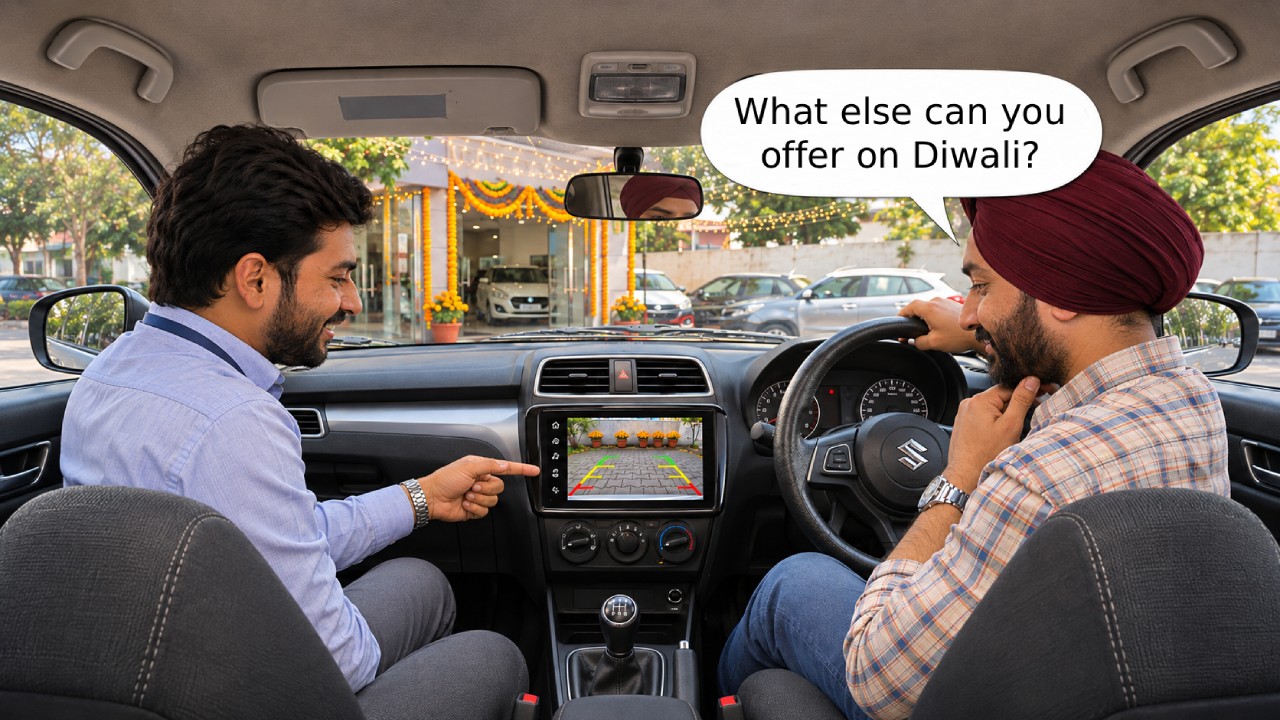
The customer has test-driven your used Swift, called his wife and agreed on a delivery date. Just before you write up the booking, he asks, “It's Diwali. What else can you do for me?”
Earlier, while reversing into the showroom parking space, he asked how much it would cost to fit a camera. Pick up that conversation. “You mentioned a reverse camera. If we fit one before delivery and include the installation, would that work for you?”
That gives him a real choice. He knows what he'll get, and once your installer confirms the price, you know what it will cost to close the deal. The same idea works with fuel, the next service or, on an eligible car, warranty cover. Which one is worth offering depends on the car and the person buying it.
Start with what the customer mentioned on the test drive
A reverse camera makes sense on that Swift because the customer asked about one. On the next car, the camera may already be there. Look at the actual vehicle before putting together an accessory offer. If a customer wants a boot mat, show them the one that fits. If they want a camera, check that it works with the car's display and that your installer's quote includes the wiring and labour.
Sometimes the customer would rather put the money towards the drive home for Diwali. A ₹2,000 fuel voucher is easy to explain if you can point to a pump on their route that accepts it. Check the outlet and expiry before you offer it, then hand over an activated voucher at delivery. For an EV buyer, ask where they charge. Someone who plugs in at home every night may have little use for credit on a public charging network.
Open the service book together
“When will I need to spend money on this car?” is an opening for a different offer. Take out the service record and check what is due next. If the next scheduled visit includes an oil and filter change, get a quote from the workshop. You can then tell the customer which visit you'll pay for, where to take the car and whether they'll owe anything for the agreed work.
Be precise about “free service.” If the workshop already waives labour on that visit, say which parts or consumables your dealership will pay for. Give the customer enough time to reach the service interval and use the offer.
If their concern is a breakdown, discuss warranty cover separately. Confirm that the provider will accept that particular used car before you promise a plan. Show the customer when cover starts and ends, which repairs qualify, what they would pay towards a claim and whom they would call. Those details give them a way to judge whether the cover is worth choosing.
Work out how much room is left in the deal
Suppose you approve ₹5,000 for Diwali concessions on the Swift. Your salesperson has already agreed to take ₹2,000 off the asking price. That leaves ₹3,000 to work with.
In this example, the installer quotes ₹2,400 for the camera, including fitting. The discount and camera together cost you ₹4,400, leaving ₹600 of the approved amount. If the customer chooses the ₹2,000 fuel voucher instead and there's no issue fee, the total concession is ₹4,000. Make clear that the customer can choose one of the two.
And if the customer says, “I need the invoice to come down by another ₹3,000,” take that answer seriously. A camera won't solve a shortfall in their budget. You already know how much room you have to discuss the price.
Put the promise on the quotation
If you advertise the offer on WhatsApp or your website, identify the eligible cars, give the booking and delivery dates, and say whether customers can combine it with a cash discount. Decide what you'll offer if an accessory is unavailable or your workshop delays delivery.
For the Swift buyer, the useful line on the quotation is simple. “₹2,000 cash discount agreed. Reverse camera, including parts and fitting, to be installed before delivery at no additional charge.” When the family comes to collect the car, your salesperson can hand over the keys, select reverse and show them the camera they chose.