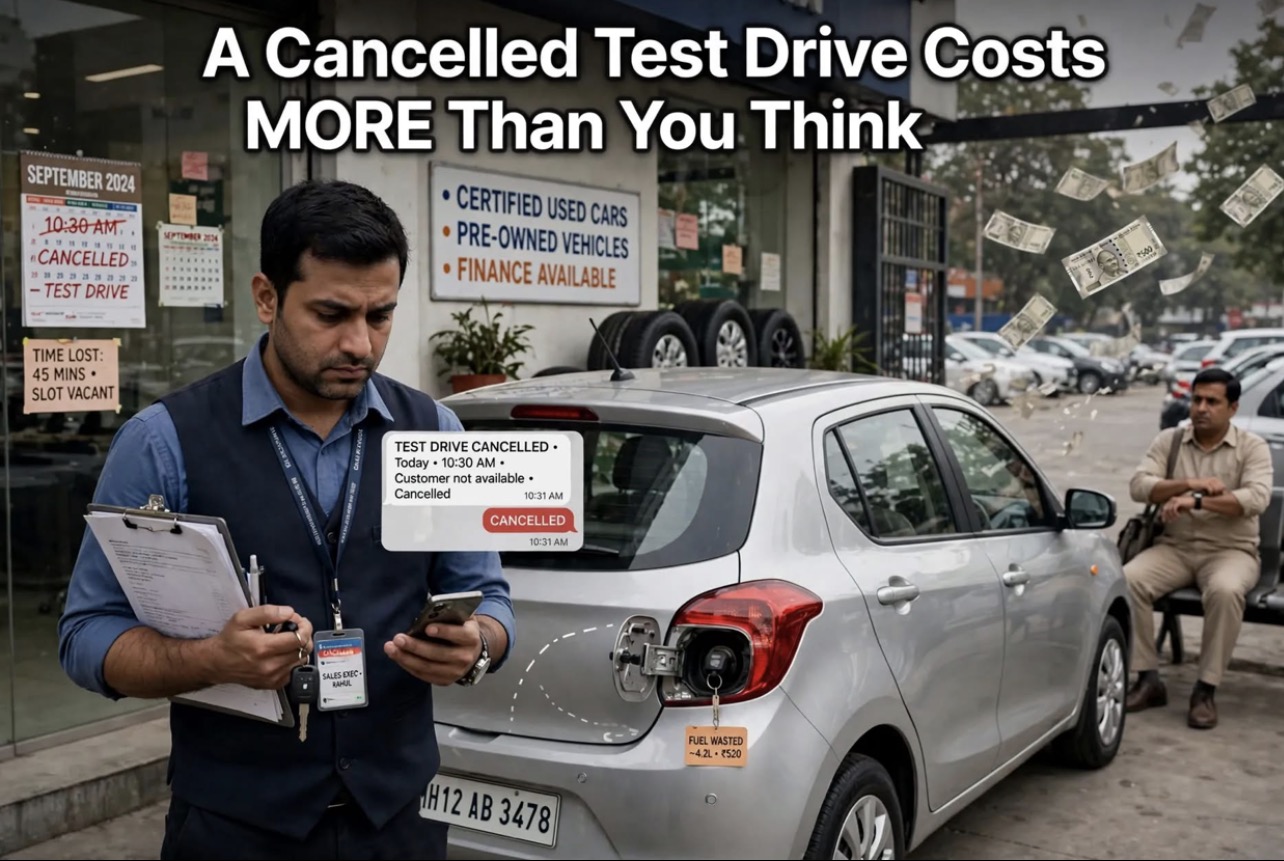
When a customer cancels a test drive, have you lost a sale or spent time on a visit that may still happen? The immediate cost depends on whether the preparation remains useful and whether the booking prevented other worthwhile work. Losing the buyer is a separate question.
As a sales manager, you are protecting your team's time. It is reasonable to take the disruption seriously, especially when someone has already brought the vehicle to the showroom. But attaching its selling price to the cancellation turns an uncertain opportunity into a sale you supposedly had.
The appointment and the enquiry have different outcomes
A customer can cancel a visit while continuing to consider your vehicle. A cancellation can also accompany a decision to buy elsewhere. The appointment entry alone does not tell you which has happened.
Recording the visit as cancelled describes an event. Recording the enquiry as lost makes a judgement about the customer's buying decision. Keeping those separate allows you to acknowledge the interruption without writing off an interested buyer.
There is also a difference between a cancellation preceding a lost deal and causing it. A customer who had already chosen another vehicle might have cancelled because the decision was made. Counting that as a sale destroyed by the missed appointment gets the sequence backwards.
Preparation is wasted only to the extent that it loses its use
The first distinction is between extra expenditure and work covered by costs that remain unchanged. In its decision-making material, the Institute of Cost Accountants of India distinguishes costs that change between alternatives from expenditure that continues regardless. Applied to a cancelled drive, that means the showroom's normal rent does not become a new cancellation expense.
The same applies to a salesperson's fixed salary when their pay does not change. Their preparation time still matters, but assigning part of their salary to the appointment does not establish that the dealership spent additional cash.
Extra paid hours devoted solely to that visit are different. So is fuel consumed on an otherwise unnecessary journey to collect the demonstration vehicle. Those resources have been used, although whether their entire cost was wasted depends on what useful work remains.
A clean vehicle can still be shown to someone else. Fuel remaining in the tank is available for another drive. Preparation that leaves the vehicle ready for the next enquiry retains value; it should not all be written off simply because the intended customer did not arrive.
An empty slot matters when another use of it was lost
The second cost is selling capacity. A salesperson can have no additional wage expense and still lose the chance to do valuable work. In its relevant-costing exercises, the Institute of Chartered Accountants of India treats the benefit sacrificed from another available use of a resource as an opportunity cost.
For your showroom, that distinction matters when reserving a salesperson or demonstration vehicle forces you to decline another test-drive request. If the other buyer cannot accept a different time, the reservation has displaced a real opportunity. An empty diary entry with no competing demand does not establish the same loss.
Notice changes how much capacity remains recoverable. A cancellation received before preparations begin leaves more room to rearrange work than one received while the salesperson is waiting with the vehicle. The relevant question is what useful activity was actually prevented, not simply how long the appointment was meant to last.
Answering outstanding enquiries or completing an exchange appraisal can give the released time a productive use. That does not necessarily replace a time-sensitive opportunity with another buyer, but neither should productive work be counted as idle time.
A displaced appointment is still only an opportunity, not a guaranteed purchase. If you later estimate its financial effect, the missed selling time and the potential margin from that same buyer must not become two separate claims for the same lost benefit.
A confirmed loss concerns potential margin, not the price tag
A customer who agrees to another suitable date has postponed the visit. Someone who says they have bought elsewhere has ended that purchase opportunity with you. An unanswered message leaves the outcome unknown; silence does not prove either continued interest or a completed purchase elsewhere.
Even when the buyer is genuinely lost, the vehicle's full selling price is the wrong measure of lost earnings. That price includes recovery of the cost of the vehicle. It was never all money the dealership would keep as profit.
The relevant distinction is contribution. In its Cost Accounting material, the Institute of Cost Accountants of India calculates contribution by deducting variable costs from sales revenue. That contribution helps cover fixed costs before there is a profit.
For the proposed deal, the earning opportunity therefore concerns the margin after the vehicle's cost and the selling expenses attributable to completing that sale. A commission payable only on completion would not be incurred if the deal never happened. A lost enquiry does not justify treating avoided expenses as money lost.
Nor does losing that buyer necessarily remove all the vehicle's earning potential. The vehicle remains available to sell. A later sale on comparable terms may preserve its margin, while a longer wait could add holding expense or lead to a different selling price. Those effects depend on what actually happens, rather than following automatically from the cancellation.
This is why potential margin is the right starting point for understanding a lost opportunity, not an automatic charge against every cancelled test drive. The appointment never established that the customer would purchase, and another buyer may still take the stock.
The next response should protect what remains recoverable
Once you separate these losses, the purpose of follow-up becomes clearer. An interested buyer needs a workable way to continue. Offering another appointment that fits their availability addresses the missed visit without assuming the vehicle or its price was the problem.
A suitable line would be: “Would another time suit you, or would you prefer to leave it for now?” It gives the customer room to distinguish a scheduling difficulty from a decision to withdraw. A vague expression of interest, however, is not a confirmed replacement appointment.
Releasing the cancelled slot matters independently of the customer's answer. Reception and the people preparing the vehicle need to know that the original visit is off, so they do not keep staff or the vehicle unavailable while someone seeks a new date. The enquiry can remain open without the old reservation remaining in force.
A clear withdrawal calls for a different response. Continuing to prepare or repeatedly pursue someone who has asked you to stop creates fresh work without an agreed next step. The cost-accountancy institute's distinction between past expenditure and future decisions matters here: effort already spent cannot, by itself, justify spending more.
You can take wasted preparation seriously without declaring the buyer lost. Judge the cancellation by what became unusable and which worthwhile opportunity disappeared. That gives you a sound basis for deciding what to recover, rather than treating every vehicle that was not test-driven as a vehicle you failed to sell.