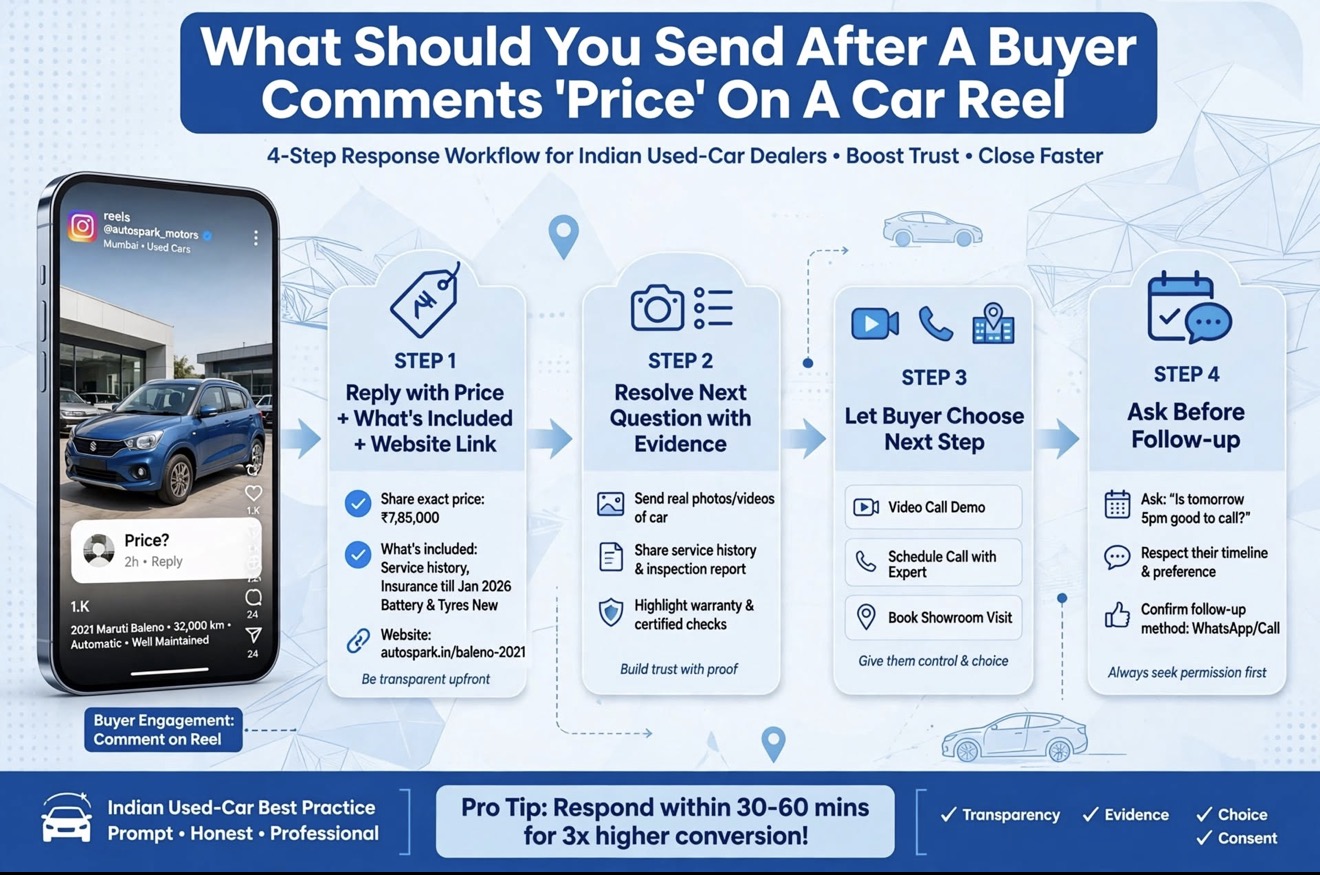
Reply with the asking price and explain what the buyer would pay separately. Confirm availability, then offer the car’s inventory page on your own website so they can examine the details. A phone number should not be the admission fee for getting that information.
For someone handling Instagram enquiries at an Indian used-car showroom, the temptation is to turn every comment into a callback. But the buyer may simply want to establish whether the car fits their budget without inviting sales calls. “DM us” alone leaves that first question open.
1. Give the public price answer and offer your website listing
Identify the exact vehicle and check its approved asking price against its current stock status. An old reel caption is not your stock record. When a reel features several cars, establish which vehicle the buyer means before quoting.
These suggested messages are templates for your own replies. Fill the brackets with verified information and delete any wording that does not fit.
“Our asking price for this [model and variant] is ₹[price], including [included costs]. It is currently available. Additional charges are [items and amounts]. You can view [stock reference] through our profile’s website inventory link. I can send its direct page by DM if you prefer, or answer questions here.”
Replace “charges extra” with the actual exclusions. Depending on your offer, these might include an RC-transfer service charge or an insurance cost. Give known amounts immediately; where an amount depends on information from the buyer, name the charge and explain what you need to calculate it.
If nothing compulsory remains payable, state what the quoted total covers. Check the tax treatment before replying, and never describe a partial quotation as all-inclusive. A down payment is not the car’s selling price.
Under its 2022 advertising guidelines, India’s Central Consumer Protection Authority bars disclaimers from hiding material information or correcting a misleading claim. Keep compulsory additions beside the price rather than revealing them at the showroom.
Share the individual car’s page, not just your homepage
Keep a shareable inventory page for each car on your showroom’s own website. Use it to bring the asking price and verified vehicle details together with photographs. The buyer should be able to revisit that information or share it with someone helping them decide.
Before sending the link, open the page on your phone. Check that its price and availability agree with your reply, and make the details accessible without requiring a callback form. A link to outdated stock information creates another question instead of answering one.
Keep your website inventory accessible through your Instagram profile. If the buyer chooses a private exchange, send the exact vehicle page rather than making them search your whole stock:
“Here is the [model and stock reference] we discussed: [direct vehicle-page link]. You’ll find its photographs and specification there. Is there anything you would like a closer look at?”
If the vehicle has already sold, disclose that before suggesting another:
“This particular car is sold. Would you like me to share an available [model or body style] that fits your budget?”
Mark the sale in the reel caption and on the website listing, then keep answering later comments accurately. Once the buyer accepts alternatives, share each relevant car’s own page. Similar appearance does not establish matching specification or condition.
2. Resolve the next information gap with evidence
Spend the most attention here: the next question is your best opening to establish what the buyer still needs to know. Appointment confirmation later is largely an administrative formality. It cannot resolve uncertainty about the vehicle.
When someone asks “Automatic?”, check and name the transmission and variant. When they ask about a door mark, send a close-up plus a wider view that locates it. A polished reel of the entire car does not show enough about that particular concern.
Explain what the footage shows rather than leaving the buyer to interpret it:
“This clip shows the [panel] you asked about. The inspection note describes [verified finding]. I’ve included a wider view so you can see its position.”
For service history, identify the records available and the period they cover. Mention missing periods rather than describing a few invoices as a complete history. Conceal the previous owner’s personal details before sharing document extracts.
If something remains uncertain, identify who will verify it. “Our technician is checking that detail; I’ll come back with the finding” gives a more honest answer than an unsupported assurance.
For a vague “details” message, share the vehicle page and ask what needs further explanation. Do not send the same link again when the buyer has asked a specific question. Continue publicly if they prefer; offer private messages for footage or personal circumstances.
3. Let the buyer choose footage, a call or a visit
Once you have answered the concern, suggest a next step that suits it. Avoid making a call mandatory for someone who still wants to inspect the car remotely.
“I can film that area more closely if it would help. Would you prefer that or a call? We can also arrange a showroom inspection and test drive whenever you’re ready.”
For more footage, establish what they want shown. For a call, agree when to speak and request a number privately if necessary. Someone who already wants to visit can go straight to arranging it.
Confirm that the car will be at the correct branch and that a colleague can receive the buyer before offering a firm appointment. Send the agreed details together:
“Confirmed: [vehicle and stock reference], on [date] at [time], for your inspection and test drive. Please come to [branch and full address] and ask for [staff member]. Here is the location pin: [location link].”
Explain the showroom’s test-drive requirements before the journey so the buyer arrives prepared. State whether the appointment includes an agreed vehicle hold; an inspection booking should not imply a reservation you have not made.
When another salesperson will receive them, hand over the conversation and supporting material. Tell that colleague what the buyer wants to examine, so the visit does not begin by repeating questions already answered.
4. Ask before arranging another follow-up
If the buyer wants time to consider, ask whether a later message would help. Give that message a defined purpose rather than starting indefinite reminders.
“Would a message on [day] suit you, once you’ve looked through the listing and footage?”
Note the agreed timing and reason so colleagues do not send duplicate reminders. Respect a refusal, and do not interpret a missing reply as agreement to repeated messages.
Keep requests for alternatives separate from general marketing. A buyer asking for another automatic hatchback has asked for relevant cars, not every arrival at your showroom.
Avoid replacing one unanswered question with another task
“Check our website” is no better than “DM us” when neither reply includes the price. Use your inventory link to support the answer, not to withhold it. Likewise, offer WhatsApp when it helps the conversation rather than insisting that an Instagram buyer changes channels.
A large photo bundle can be equally unhelpful. Put the requested detail first and explain it. Someone asking about tyre condition should not have to search through cabin photographs to find your response.
Look for an answered question and an accepted next step
Judge the exchange by whether the buyer received a usable quotation and a clear answer to their concern. Count a visit as agreed when they accept its date and time, not when you invite them. Learning that the car exceeds their budget can also settle the enquiry.
Begin with the next price comment waiting for an answer. Verify the car’s status, check its website listing and reply with the price before requesting contact details. Give the buyer enough information to choose whether to continue.