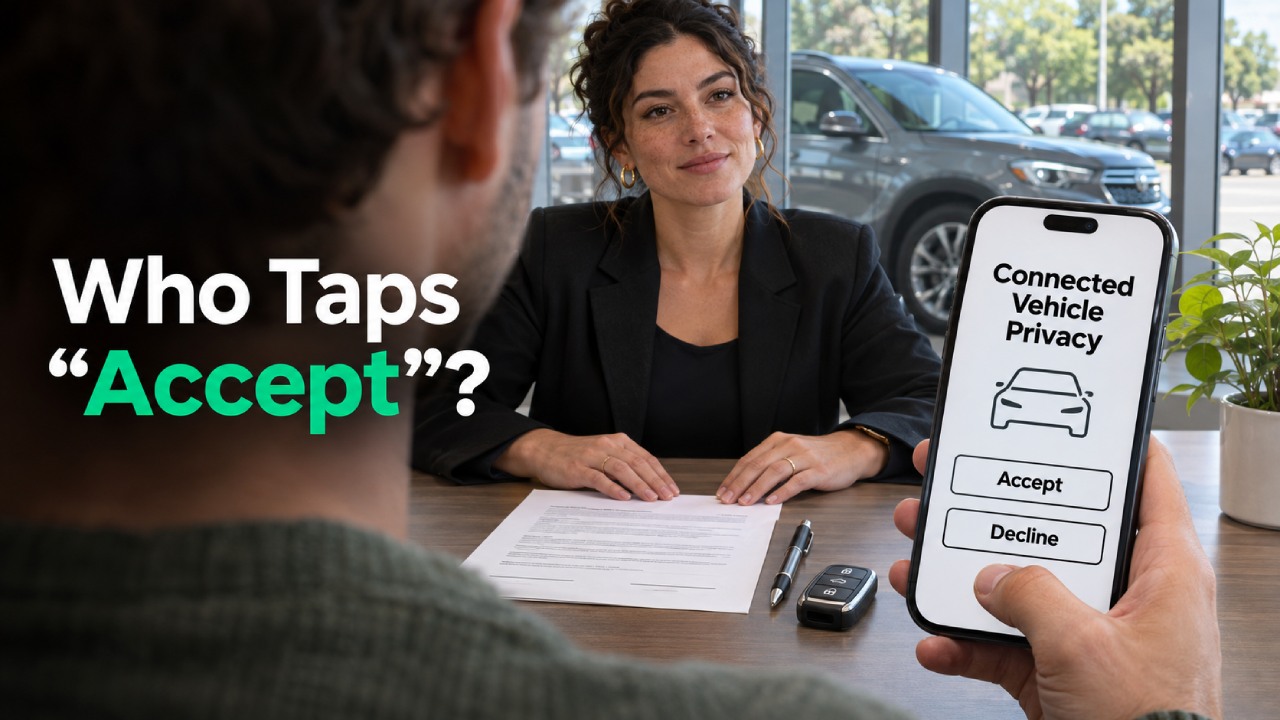
“I can get the app ready while you finish signing.” In this illustrative handover at an Oregon used-car dealership, you have offered to help a buyer set up connected services on a used Chevrolet. They want remote access but do not want to agree to data uses they have not considered.
The trouble starts when getting the app ready reaches an acceptance screen. Your job is to help the buyer understand the choice without making it. If that leaves setup unfinished, the delivery needs a clear handoff rather than an acceptance the buyer never gave.
An account, a linked vehicle and an active service are different things
You first check the provider’s instructions against the vehicle and requested service. Chevrolet explains that app functions depend on vehicle equipment and the service plan. A familiar app does not establish that this used vehicle supports everything the buyer expects.
You separate the work into distinct tasks. Creating an account establishes the buyer’s login; linking associates the vehicle with that account. Service activation concerns the connected offering they want to use. Privacy choices concern the information collected and what the provider may do with it.
Those tasks need not appear as neatly separated screens. An acceptance request can interrupt the technical work, so you cannot leave privacy decisions until the end. The buyer enters their credentials while you help them find the appropriate instructions.
The acceptance screen changes your role
OnStar’s app guidance places agreement to its terms at initial sign-in. When you reach the provider’s acceptance prompt, the buyer is still occupied with paperwork. “Just do whatever gets it working,” they say.
You stop. That request expresses the result they want; it does not tell you which data uses they would accept after reading the disclosures.
In its October 29, 2026 announcement of a $220 million GM settlement, the Oregon Department of Justice alleged that dealership employees accepted terms for customers without permission. The case concerned driving and location information sold through data brokers to insurers.
Paragraph 57 of the judgment published by Oregon DOJ requires the GM defendants to develop and implement training and program materials for authorized GM dealerships. Those materials must instruct staff to let consumers examine applicable privacy disclosures and require consumers to accept them personally before OnStar enrollment.
The judgment allows 60 days from its defined effective date, November 30, 2026, for that provision. The October 29 announcement does not start the clock. The GM defendants settled without admitting violations or liability.
That obligation runs to the defendants and concerns GM-authorized dealerships. It is not a universal dealer rule. Applying the same customer-led boundary at an independent store is the recommended practice here.
The disclosures inform the decision without settling it
You turn the phone toward the buyer. “I can help you find what this covers. You need to decide whether you want to continue.” They put down the paperwork and ask whether they can keep the remote features while refusing other uses of their information.
You open GM’s U.S. privacy statement and locate its descriptions of collected information, purposes and recipients. GM describes location information supporting vehicle-location functions and sharing with providers that deliver services. Its connected-vehicle controls and privacy-rights sections explain routes for changing choices.
You distinguish the processing described for the requested service from optional uses where the provider offers separate choices. A marketing preference is not a substitute for reviewing connected-service permissions: GM says its marketing opt-out does not end transactional or service-related uses.
The buyer reads, then asks a harder question: “If I say no here, does the car stop sending information?” You cannot give that assurance. GM says an unenrolled vehicle can still transmit vehicle and location information when someone presses the blue OnStar button to restore connectivity. Declining one choice cannot honestly be described as stopping every collection pathway.
You give the buyer time to read without directing them toward a button. They understand more now, but they still want a provider explanation of which choices affect the feature they came for. Finding the disclosure has not resolved their concern.
Your manager asks whether you can finish activation now and revisit the settings later. That would settle the dealership’s unfinished task before settling the buyer’s decision. “I want to read this at home,” the buyer says. You stop the enrollment work, even though the requested connected feature has not been demonstrated.
Deferred setup needs an owner, not an assumed yes
You record the assistance as deferred. The note identifies where setup stopped, states that acceptance was not completed, and records the question awaiting an answer. That gives the next employee a starting point without suggesting that silence means agreement.
The other outcomes deserve equally precise records. If the buyer declines, document the scope of that refusal rather than labeling every connected service unwanted. If they proceed, let them make the selections and submit acceptance, then confirm the resulting service status before marking assistance completed. A completed delivery note should describe what actually happened.
You show the buyer the Help Center described in Chevrolet’s app instructions, which provides support resources and a route to call OnStar. You also give them your name and direct dealership contact information. Official support handles the provider question; you remain responsible for the dealership’s unfinished assistance.
Before they leave, you agree on when to follow up and what that conversation will cover. The follow-up is an opportunity to answer the open question, not an appointment at which the buyer is expected to accept.
You retain the process note, not passwords or verification codes. Account screenshots are unnecessary when a short description records the stopping point; they can capture unrelated personal details. The buyer leaves with setup unfinished, but knows who will help next.
The training review follows the choices, not just the activation
When your manager reviews the handover, the original offer deserves attention. Saying you would get the app ready during paperwork made the task sound entirely technical. The next offer should make room for a pause: “I can help with setup, and we’ll stop whenever it asks you to make a choice.”
For the next observed delivery, the manager watches who selects permissions and who submits acceptance. A buyer holding the phone is not enough if the salesperson directs every answer. Delivery quality should recognize customer-led setup and accurate handling of a refusal or deferral, rather than reward activation totals alone.
Keep the record of new permissions separate from the purchase agreement and warranty discussions. Previous-owner data removal is another task, not evidence that the new buyer has agreed to anything. Separate records prevent one completed delivery item from standing in for a different decision.
The buyer may ultimately accept the service or decide the tradeoff is not worthwhile. Your responsibility is to explain the available path without choosing it for them. Technical assistance can resume later; acceptance should wait until the buyer is ready to give it.