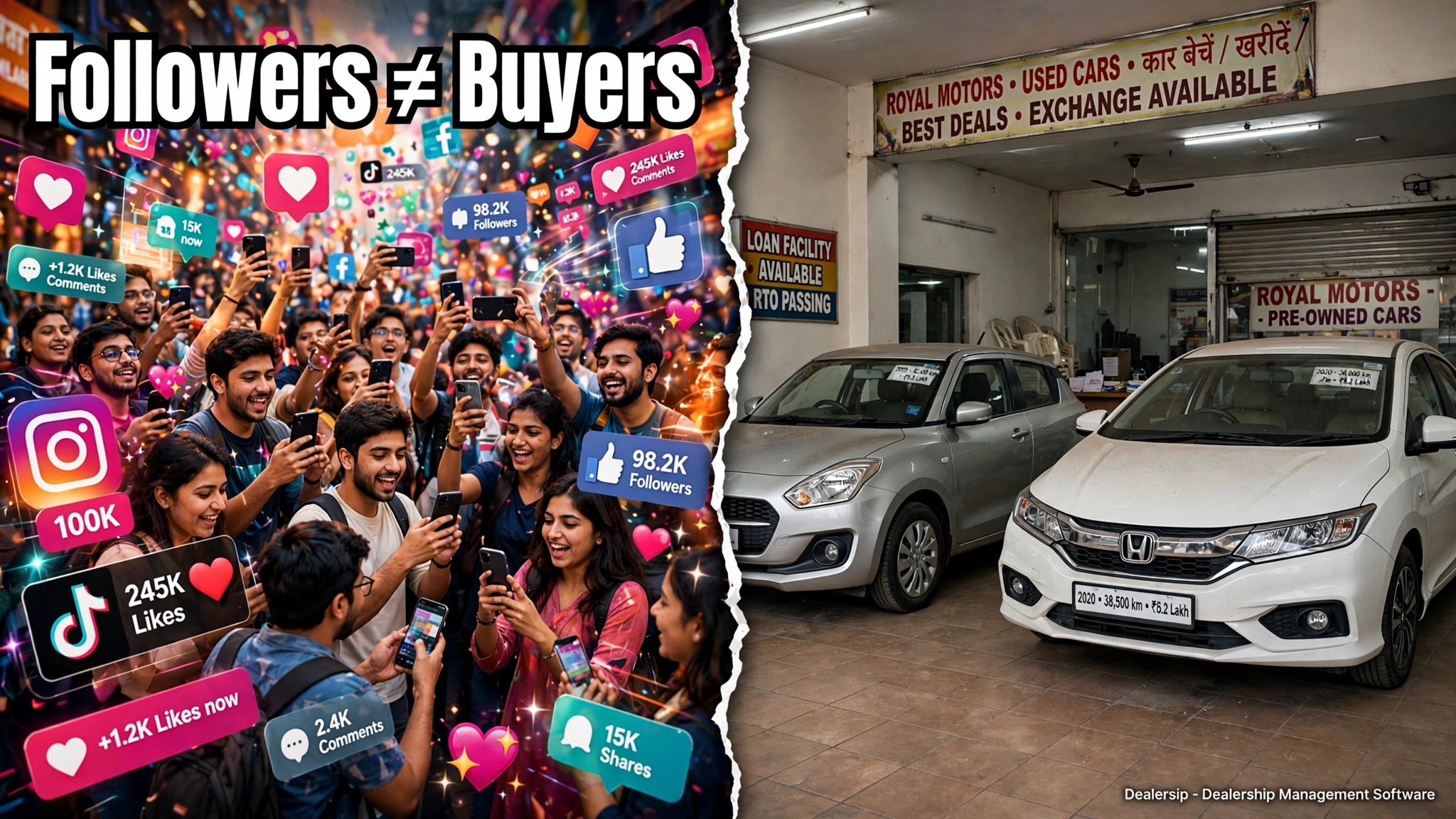
Why can your dealership’s follower count keep climbing while vehicle posts attract little attention and the showroom stays quiet? The count cannot tell you whether today’s stock reached anyone who might visit. Before you ask for more followers, you need to understand where that connection is missing.
It is understandable to favour a growing number you can show the owner. But a buyer is deciding whether a particular car deserves a journey, not whether your page deserves a follow. They may be protecting their time from a wasted trip to see a sold car or discover a problem the video never mentioned.
Following a page does not guarantee seeing its posts
In its guidance on video performance, YouTube explains that subscribers do not represent the audience watching each upload. People can remain subscribed to channels they have stopped watching. YouTube also says its Home recommendations consider a viewer’s viewing and search history, alongside how videos perform with similar viewers.
In its explanation of content distribution, Meta describes systems that predict what each person will value, drawing on behaviour and feedback. Its Facebook and Instagram recommendations include content from accounts the viewer has never followed. Your follower base is therefore neither a guaranteed audience nor the outer limit of a post’s possible audience.
For your showroom, the implication is straightforward: accumulated interest in the page does not establish demand for the next vehicle video. Someone who followed after an entertaining clip has not committed to watching every stock update.
These published explanations also give you a reason not to jump straight to account suppression when views disappoint. A gap between followers and viewers is not, by itself, evidence of a restriction. The first question is reach: how many people actually encounter the vehicle post?
The people watching may not be buyers for your stock
Buyer fit is a separate question from reach. It concerns whether someone could realistically buy the advertised car and is willing to visit your showroom. A viewer can enjoy the content without meeting either condition.
Entertainment gives someone a reason to watch even when they have no purchase in mind. A bargain-led video can attract people whose budgets do not match the vehicles you normally stock. Neither response makes those viewers worthless, but neither establishes an immediate sales opportunity.
An audience spread across India is not automatically a pool of people willing to travel to your showroom. Equally, distance alone does not disqualify a buyer who wants a particular vehicle. What matters is their willingness to make that journey, rather than whether their city matches yours.
Purchase timing creates another gap. Someone researching a future exchange can follow you long before they are ready to visit. A person who has already bought can remain a follower without needing another car.
Audience geography can provide clues, but it cannot establish someone’s budget or purchase plans. YouTube also cautions that geography reports may be incomplete because of privacy or data limitations. Missing location information means you do not know where those viewers are; it does not prove that nobody nearby is watching.
A suitable buyer still needs enough certainty to visit
Booking friction is the avoidable uncertainty or effort between wanting to inspect a vehicle and agreeing when to come. The car could suit the buyer, yet the post or subsequent conversation may leave them unable to plan a useful visit.
A salesperson may prefer to discuss price privately so they can explain the vehicle before the buyer compares it. But withholding the asking price requires an extra conversation before the buyer can establish affordability. If the prominent amount is a down payment, clearly identifying it matters because it does not tell the buyer the vehicle’s price.
Condition information serves a different purpose. Clear photographs of known blemishes and an honest description of outstanding work help someone decide whether the car deserves inspection. They do not replace an inspection, but they answer questions that a polished exterior walk-around can leave open.
Availability and location need to refer to the advertised vehicle, not merely the dealership. A showroom address is insufficient if the car is at another branch or has not arrived. A buyer needs to know where that car can actually be seen and whether the proposed time is possible.
Consider this invented exchange. The buyer asks, “Is this car at your Pune showroom? Can I see it on Sunday?” The reply says, “Please send your number. Our team will call.”
The buyer has asked about a visit, but the reply creates another handover without answering either question. Collecting a number may be useful, yet the conversation remains unfinished until someone confirms the vehicle’s location and a viewing time. Calling that message a lead does not mean you have helped the buyer arrange anything.
Similar showroom results can hide different problems
Few visits alone cannot identify what went wrong. Your evidence needs to connect the audience for particular stock posts with the enquiries those posts generate, rather than comparing total followers with total walk-ins.
Even a view count needs care. YouTube describes unique viewers as an estimate of distinct people watching during a selected period, accounting for repeat viewing. That makes it a different measure from total views. Compare similar vehicle posts over equivalent periods so that one unusually popular entertainment video does not become the standard for every stock update.
| Observable pattern | Problem to investigate | What deserves attention |
|---|---|---|
| Stock posts attract few viewers compared with similar posts over comparable periods. | Limited reach | How the content earns attention and distribution. There is little basis yet for judging the response of suitable buyers. |
| Posts attract viewers, but enquiry conversations reveal unsuitable budgets, distant locations with no willingness to travel, or no current purchase plans. | Poor buyer fit | Whether the content attracts people whose demand matches the stock you are advertising. |
| Enquirers indicate that the car fits their budget and they want to inspect it, but questions about availability or viewing arrangements remain unanswered. | Booking friction | The information and replies needed to turn expressed interest into an agreed visit. |
These patterns guide investigation; they are not automatic verdicts. A message asking the price followed by silence could mean the car was unaffordable, not that the sales team mishandled a ready buyer. If the price was hidden, the enquiry may have been an attempt to establish suitability in the first place.
That distinction matters when you judge marketing performance. Once the price is visible, fewer price-only messages need not mean less buying interest. Likewise, a busy comments section cannot establish buyer fit without evidence from the conversations behind it.
The decision is therefore bigger than whether to chase another follower milestone. More distribution cannot answer an unresolved question about availability, while a better appointment reply cannot make the wrong vehicle fit someone’s needs. Keep the follower count as context, but choose the next piece of work according to the obstacle between your advertised stock and a possible visit.
Frequently asked questions
Should I count a social media walk-in if the buyer never messaged us?
Yes, record social media’s influence when the visitor identifies your content as a reason they came, even if they phoned first or arrived without contacting you. Ask which vehicle or post they remember, and distinguish how they discovered the car from how they contacted the showroom. This prevents an empty inbox from being mistaken for evidence that your content brought nobody in.