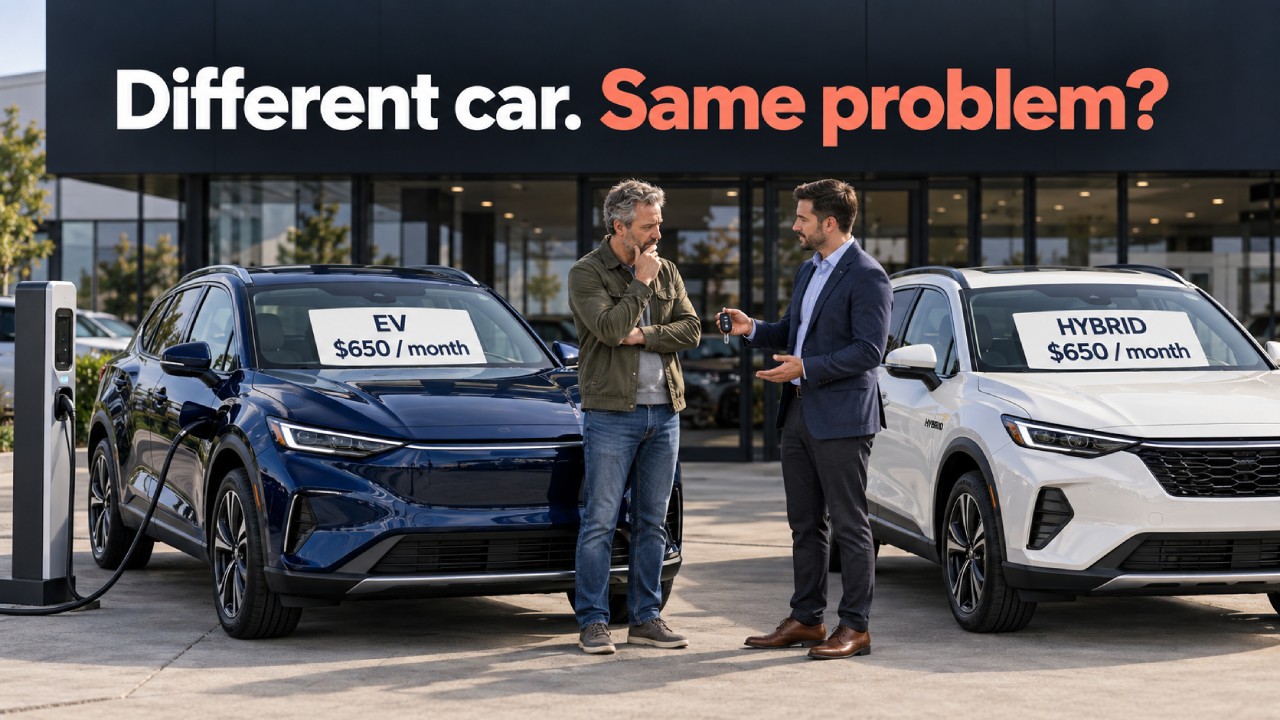
A customer wants out of an EV, and a hybrid looks like the obvious replacement. Yet the buyer could leave with a payment they still cannot afford, or another vehicle that rides poorly or cannot tow their trailer.
Before you show replacements, establish what the buyer wants to leave behind. They may be protecting themselves from another expensive mismatch. Choose around that complaint, including whether replacing the vehicle makes sense at all.
Find the problem the next vehicle must fix
Try asking: “What happened with this vehicle that you don't want to deal with again?” Distinguish the weekly charging routine from occasional travel. Finding somewhere to charge after work is a different problem from interrupting a vacation drive.
Then separate payment pressure from other complaints: “If the payment stayed the same, would you still want to replace it?” A yes identifies another reason to leave; it does not establish that charging is the problem. Ask what would still need to change.
A cramped second row or uncomfortable ride calls for different vehicle specifications, not automatically a different powertrain. Consider another EV if electric driving still fits and a different model addresses the complaint. Carry that requirement onto the test drive.
Also assess keeping the current EV if an achievable charging change would address the complaint. Confirm access and cost, then compare that arrangement with the cost of trading. Keeping the vehicle deserves consideration when the fix works and replacement costs are difficult to justify.
Set the budget before choosing the engine
If payment pressure is driving the trade, establish the EV's loan payoff and trade allowance before presenting a hybrid. The Consumer Financial Protection Bureau explains that financing a trade-in's negative equity increases the cost of the replacement loan. Switching propulsion does not remove that unpaid balance.
Show the amount financed alongside the payment, and keep down payments and loan terms comparable. In its loan-comparison guidance, the CFPB explains that extending repayment can lower the monthly bill while increasing total interest. That does not establish that the hybrid costs less.
Set a replacement price ceiling that accounts for the payoff shortfall and transaction costs. Before calling the switch cheaper to own, compare projected fuel spending with the customer's actual charging bills and obtain insurance quotes for the candidates. If nothing suitable fits, choosing a powertrain is premature.
Make the conventional hybrid earn any price premium
The U.S. Department of Energy explains that a conventional hybrid replenishes its battery through braking and engine operation rather than an external charger. That addresses the charging obligation. A gasoline vehicle addresses it too, so charging relief alone does not justify paying more for the hybrid.
Compare actual selling prices for vehicles with similar equipment and condition. Do not compare a basic gasoline trim with a loaded hybrid and call the entire difference a powertrain premium. With used inventory, judge the particular vehicles rather than assuming which version should cost more.
The Department of Energy and Environmental Protection Agency provide a hybrid calculator that uses annual mileage, driving mix and fuel prices. It can include financing costs in the payback calculation. Use the buyer's mileage and intended ownership period rather than assumptions that favor the hybrid.
For a highway commuter, examine highway ratings rather than selling the hybrid on its city number. If fuel savings would not recover the extra purchase and financing cost before the planned trade, give gasoline serious consideration. But failing that fuel-savings payback test does not, by itself, establish which vehicle costs less over the ownership period.
The agencies' calculator excludes resale value, insurance and maintenance. Compare purchase prices less estimated resale values, then add financing and running costs over the same period. Ground resale estimates in comparable vehicles at the expected age and mileage. Test reasonable resale ranges for both candidates rather than assuming the hybrid retains its premium.
Include maintenance in the EV-to-hybrid comparison. The Department of Energy's maintenance guidance explains that both hybrid types retain engine-related maintenance requirements, while battery-electric vehicles generally need less routine maintenance. Review the candidate's service schedule rather than carrying the EV's maintenance budget into the next deal.
Match the replacement to the trip and the trailer
When the complaint concerns travel, ask about the journey that causes trouble. Establish whether the buyer objects to charging stops or whether the vehicle cannot accommodate the load. Those answers lead to different shortlists.
For towing, check the exact configuration against the loaded trailer and the people and cargo traveling with it. Ford's towing guidance distinguishes trailer capacity from vehicle weight limits and directs owners to vehicle-specific information. Apply that discipline to whichever brand you sell: check the manufacturer's ratings, required equipment and payload limits before recommending the vehicle. A hybrid badge does not answer the capability question.
Judge a plug-in hybrid by how it will actually be used
A plug-in hybrid, or PHEV, offers a different arrangement. The Department of Energy's PHEV explanation describes a vehicle that can take electricity from a charger and use its combustion engine as battery charge runs down. Consider it when the customer wants to keep routine charging but stop depending on chargers during longer journeys.
Ask where the buyer would plug in after the trade. Dependable workplace charging may suit them even without a home charger. Compare the vehicle's charging time with the time it will actually remain parked, then assess how much normal driving its electric range could cover.
If regular charging is unlikely, start with gasoline operation. The EPA's explanation of PHEV labels separates the gasoline-mode mpg figure from MPGe, which expresses energy efficiency on a gasoline-equivalent basis. Use the gasoline-mode rating when comparing an uncharged PHEV with a conventional hybrid or gasoline alternative. Do not present MPGe as the mileage the buyer will get from gasoline.
An attractively priced used PHEV can still deserve consideration without regular charging. It must make sense on purchase price and gasoline-mode fuel use without credit for electric miles the buyer will not drive. When charging is realistic, include its electricity cost as well as gasoline spending.
Choose the replacement that passes the buyer's test
Use the buyer's main constraint to make your recommendation. These are options to assess against the actual vehicle and deal:
| Option | When to consider it | What could rule it out |
|---|---|---|
| Conventional hybrid | The buyer wants no charging obligation, and the ownership-cost comparison supports the candidate. | An unaffordable premium or a vehicle that fails the capability requirement. |
| Gasoline | A lower-priced suitable vehicle fits, especially when limited mileage weakens the hybrid's fuel-savings case. | Projected fuel spending makes ownership unaffordable. |
| Plug-in hybrid | The buyer wants everyday electric driving, has practical charging access and wants gasoline available for trips. | The deal relies on charging the buyer will not do. |
| Keep the current EV | An achievable charging change addresses the complaint, and replacement costs are difficult to justify. | The charging arrangement is impractical or leaves the complaint unresolved. |
| Consider a different EV | Electric driving still suits the buyer, but the current vehicle does not. | The candidate repeats the mismatch or exceeds the budget. |
| No powertrain recommendation yet | The payoff shortfall or replacement price prevents a suitable deal within budget. | Changing powertrains does not resolve the financing constraint. |
Before you ask for the sale, explain which original problem the proposed replacement addresses and what the buyer gives up to get it. A hybrid's position between gasoline and electric is not enough. Your recommendation must fit the buyer's complaint and budget, even when that means no trade.