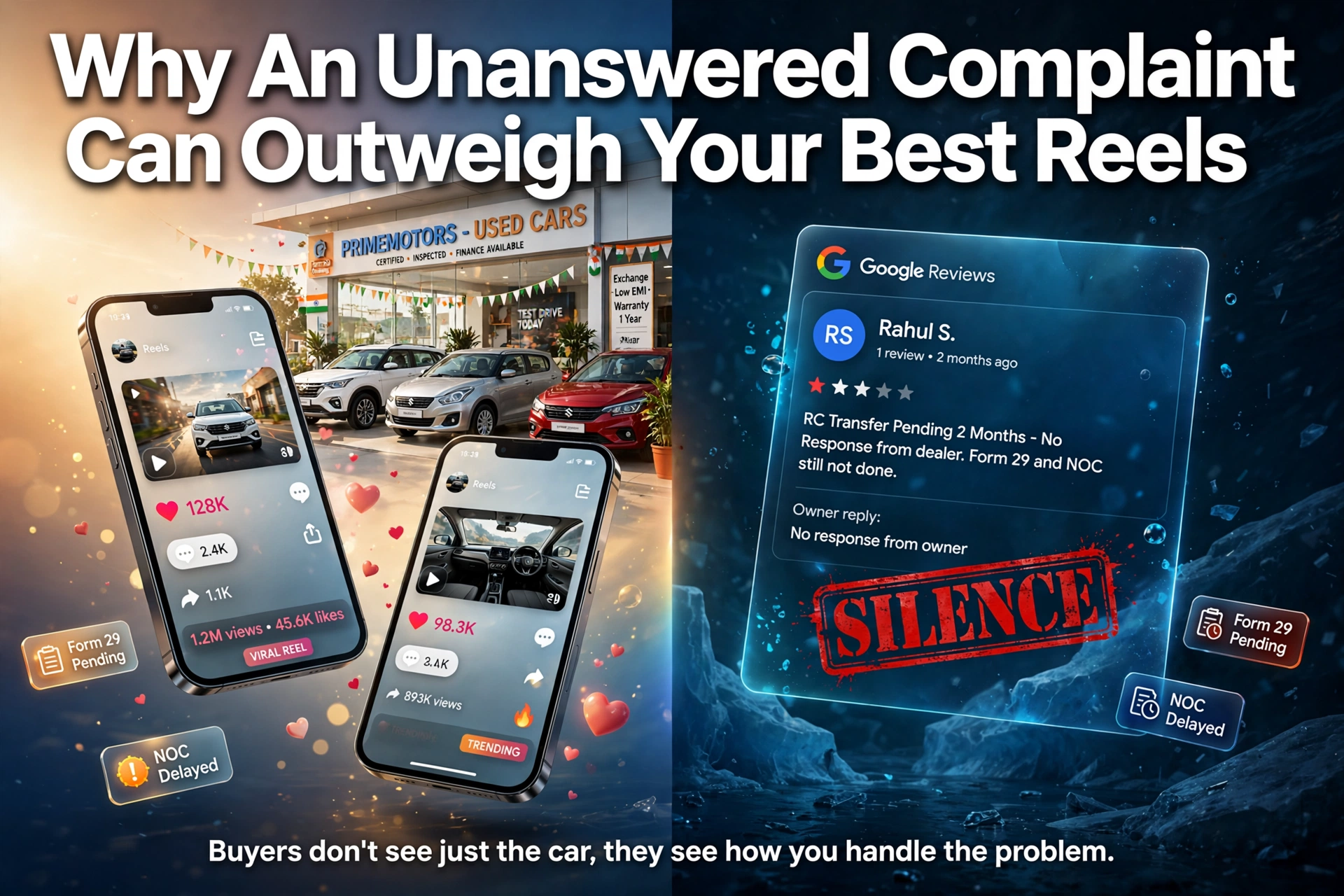
Why might a buyer admire your reels and still hesitate over a complaint you have not answered? For an Indian used-car showroom, the gap is between presenting a desirable car and showing what happens when a customer needs help after paying.
That buyer may be worried about chasing paperwork without anyone taking responsibility. If you manage sales or handle reviews, this is the distinction that matters: enthusiasm for the vehicle does not settle uncertainty about the seller.
A reel shows the car, but little of the follow-through
A walk-around can show the condition of the seats and whether the boot suits a buyer’s needs. A handover video can show a pleased customer collecting the keys. Neither tells the viewer how the showroom responds when a promised document has not arrived after delivery.
The limitation comes from what you are showing, not how well you film it. Your dealership chooses the moment and the material. Friendly staff on camera offer little evidence of how those staff will handle a disagreement.
In its festive-season survey of the broader Indian passenger-vehicle market, Grant Thornton Bharat reported that 52% of respondents used digital and offline channels before buying. That does not mean every enquiry begins with a review search. The issue arises when a prospect encounters both your promotion and a complaint, then asks a question the promotion cannot answer.
A specific complaint identifies something the buyer could face
A low rating without an explanation gives the reader little to examine. A complaint alleging that an RC transfer remains pending identifies a particular concern: will someone take responsibility for the paperwork after collecting payment?
An allegation about an undisclosed handling charge raises a different question. Can the buyer rely on the agreed total, or might another demand arrive after they have committed? A video showing an attractive car does not establish what the showroom disclosed during the price discussion.
Specificity makes an allegation relevant; it does not make it true. Your records might contradict the account, or the reviewer might have left out an important exchange. The reader needs enough context to distinguish a genuine failure from a disputed description of events.
Silence leaves the dealership’s account and the outcome missing
An unanswered complaint leaves two gaps. The prospect cannot see your explanation of what happened, and cannot see whether anyone has dealt with the problem. Those are separate questions: a reasonable explanation for a delay does not establish that the outstanding work is complete.
You may have settled the matter privately. You may be waiting for information, or avoiding a reply because the accusation feels unfair. None of that is visible to someone reading the complaint.
Google explains that an approved business reply appears publicly beneath the review. That makes the reply relevant to the next buyer as well as the person who complained. It gives you somewhere to put information that a promotional post cannot supply.
A buyer need not decide who is right before considering another showroom. They can simply decide that they do not want the uncertainty. Once the car itself looks suitable, another reel of its interior adds little to the question of whether someone will help with an unfinished transfer.
The wider record changes how much weight a complaint deserves
One old dispute should not stand for your entire dealership. A fair reading considers whether later accounts describe similar problems and whether the original issue reached a visible conclusion. Recent complaints from different customers about the same unfinished task give a prospect more reason to investigate than an isolated disagreement.
The subject of the other reviews matters too. Praise for a smooth handover does not directly answer a concern about support afterwards. An account describing how the showroom corrected a paperwork problem addresses that concern more closely, even if the customer disliked the original delay.
Dates need some care. Google also explains that editing a review changes its displayed date to reflect the update. A recently dated review can therefore concern an older transaction; the date alone does not tell the whole story.
Visible resolution adds information that age cannot. A customer’s account of receiving the outstanding document tells the reader more than a dealership reply saying that someone will look into it. An offer to investigate is a beginning, not a completed remedy.
A measured reply shows how you handle disagreement
A useful public response gives the prospect something concrete to judge without turning the review into an argument. In its reply guidance, Google advises businesses to acknowledge mistakes where appropriate and explain the limits of what they can do. That leaves room for a firm correction without a hostile denial.
The following replies are invented to illustrate the difference. For a complaint about an RC transfer, a substantive response could read:
“You have raised a concern about the pending RC transfer. Our showroom manager will check the submission record. Please contact the manager through the number on this profile and share your purchase details privately so we can identify the file and confirm its current status.”
The reader can see who will check the paperwork and what that person will examine. The commitment concerns work the showroom can undertake, rather than a completion date it has not established. The wording is credible only if someone actually carries out that check.
Compare that with “This is false. Our dealership never makes such mistakes.” The denial gives the reader no basis for assessing the dispute. “Sorry you are unhappy. Please call us” avoids the confrontation, but still leaves the reader wondering whether anyone has understood the RC issue.
A disagreement over fees needs the same connection between the complaint and the proposed examination. A response about reviewing the written quotation against the amount collected addresses the disputed charge. A paragraph praising the showroom’s reputation does not.
Public detail has a boundary. Google’s content policy restricts disclosure of personal information without consent and expressly covers financial and identification information. Posting a customer’s invoice or identity document to win an argument can expose information that should remain private.
The prospect needs to understand your position, not inspect another customer’s file. A reply can describe the issue being checked while keeping the supporting records in the private conversation.
More promotion is not the missing evidence
This changes how you judge the next demand on your attention. When a complaint raises a doubt about post-sale support, improving the next promotional video addresses a different problem. The relevant work is to establish what happened and give an accurate public account of the dealership’s response.
Reels still have a useful job: showing a buyer a vehicle worth considering. An unanswered complaint can outweigh them because it concerns the part of the purchase the buyer cannot inspect beforehand: whether you will remain involved when payment is complete and something still needs doing.
Frequently asked questions
Can I get an unfair Google review removed?
You can report it, but disagreement alone does not make a review eligible for removal. In its review-removal guidance, Google says removal depends on a breach of its content policies and explains that it does not settle disputes between businesses and customers. Reporting a policy violation is different from asking Google to decide whose account of a sale is correct.