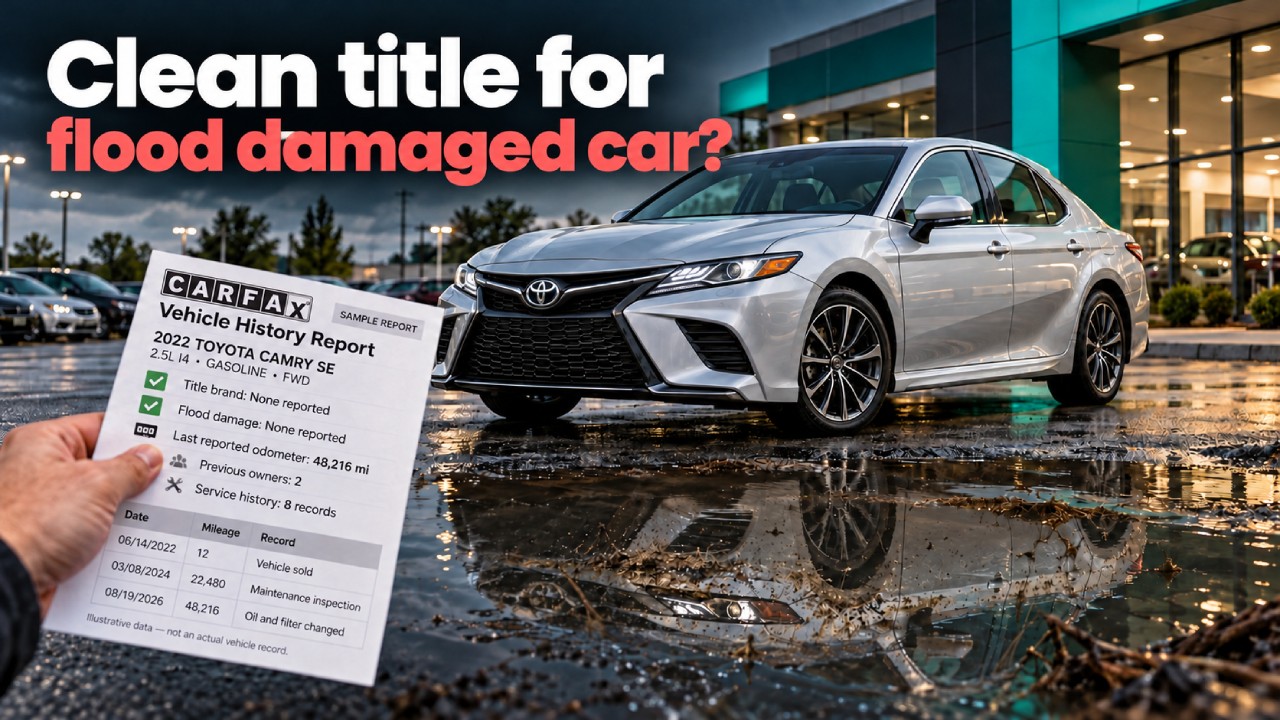
When you buy used inventory in the United States, does a clean title mean the car stayed dry? No. An unbranded title, a history report without a flood entry and a vehicle without water damage are three different things.
Clean paperwork makes a bid feel easier to defend. But it cannot overrule physical evidence that your appraiser or recon technician finds.
Suppose you’re looking at an auction car. Its history report shows no flooding, but your inspector finds silt underneath the carpet and corrosion inside electrical connectors. The seller points to the paperwork: “It’s got a clean title.” That doesn’t explain what your inspector found.
How flood damage escapes the records
Sometimes there was no insurance claim. The National Insurance Crime Bureau explains that an uninsured owner may clean up and resell a flooded vehicle with its original unbranded title. Without a claim, there is no insurer’s loss determination to follow.
Damage can also fall outside the records a buyer expects. The National Motor Vehicle Title Information System, or NMVTIS, collects title and loss information. In its consumer disclaimer, the U.S. Department of Justice says significant damage may be absent when neither an insurer nor another appropriate entity declared a total loss and no state assigned a brand.
Even reportable damage takes time to appear. DOJ’s insurance-carrier guidance requires submissions at least monthly, not immediately after every loss. Its consumer disclaimer also notes that state updates arrive on different schedules. A recently damaged car can therefore reach a buyer before the available report catches up.
Other gaps are deliberate. NICB describes title washing as fraudulently obtaining an unbranded title by moving a damaged vehicle between states. Missing history does not always mean fraud, but deliberate concealment is one reason the current document may not tell the whole story.
What the title and NMVTIS actually establish
According to DOJ’s guide to NMVTIS reports, state titling agencies apply brands to identify vehicle conditions or statuses, including flood damage and salvage. An unbranded title means the document has no such designation. It is not an inspection certificate.
A history report describes the information available through its sources. DOJ distinguishes NMVTIS title and loss records from repair and maintenance information that commercial providers may add. A report without a flood entry therefore answers a narrower question than whether the car has suffered water damage.
NMVTIS retains brands previously assigned by states, according to DOJ’s report guide. It also includes salvage and total-loss records. DOJ’s consumer disclaimer notes that an insurer may have to report a total loss even when the state has not designated the vehicle as salvage or junk. An unbranded current title does not erase that separate loss record.
There is an important age limit on mandatory insurer reporting. DOJ’s insurance guidance covers five model years: the current one plus the previous four. DOJ encourages insurers to submit information about older vehicles voluntarily.
That does not mean older cars fall out of NMVTIS. DOJ identifies state titling agencies and salvage businesses among its other reporting sources. An older vehicle can still have records from those channels or from voluntary insurer submissions.
Drying the car does not clear its electrical systems
In its U.S. flood-damage service bulletin, Toyota warns that wiring and electronic components are vulnerable to corrosion and later malfunction. Salt residue can keep conducting electricity and causing corrosion after the vehicle has dried. Detailing the cabin does not address that damage.
Toyota’s bulletin specifically directs technicians to replace electrical components after saltwater submersion rather than reuse them. It also calls for physical inspection alongside electronic testing. That distinction matters when someone offers a clear diagnostic scan as the answer to corroded connectors: reading trouble codes does not examine the connections themselves.
The National Highway Traffic Safety Administration warns that flood-related faults may take time to appear. The buying implication is straightforward: a normal test drive shows how the car performed during that drive. It cannot rule out deterioration that has not yet caused an obvious fault.
When the findings call for a pause
The Federal Trade Commission warns that sellers sometimes clean storm-damaged cars and transport them elsewhere to sell. It identifies sediment beneath interior materials and unexpectedly new upholstery as warning signs, and recommends a mechanic’s inspection for water contamination.
Those signs still need interpretation. One stain does not establish flooding, and replacement carpet alone does not establish concealment. Ask whether the location and extent of the findings fit the seller’s explanation. Silt in concealed areas together with connector corrosion deserves more investigation than a reassuring comment about the title.
Before committing dealership money, keep the buying decision focused:
- Compare the title with the history records. Look for earlier brands or loss entries that the current document does not show.
- Photograph suspicious findings. Record their locations so the technician can investigate the specific concerns.
- Obtain a qualified inspection. Have the technician assess water intrusion and affected components using applicable manufacturer guidance.
- Read the inspection and arbitration terms before bidding. Establish what access and recourse the sale actually allows.
- Pause if the condition remains unresolved. Do not substitute an assumption for an appraisal you can support.
You can pass on a car without proving that it was flooded. If the physical findings remain unexplained, a clean title is not a reason to buy it anyway.
Frequently asked questions
Does a salvage title always mean the car was flooded?
No. A salvage title alone does not establish flood damage. DOJ’s insurance-carrier guidance includes collisions and fires among the possible causes of salvage status. The underlying loss details and inspection findings help establish whether water was involved.